 |
|
Penarth Dock, South Wales - the heritage & legacy . . . |
|
|
Penarth Dock, South Wales - the heritage & legacy . . . |
 |
|||
 |
Volume One - Into the Victorian Age - Some newspaper reports from the 1870's
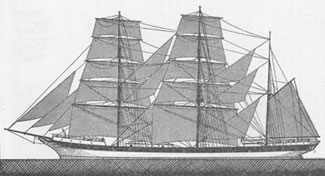
• October 1872 - A Ship Destroyed by Fire in Penarth Roads - "Early on Monday morning one of the destructive of many fires which have taken place at this port occurred in Penarth Roads, on board the ship Jane S. Southard, of Maine, Richmond, United States, and owned by Messrs. T. and J. Southard, laden with 1,841 tons of steam coal, and bound for Rio Janeiro, her brokers being Messrs. C. H. Page and Co. Since that date she had lain in the roads wind bound, and ready for sea. On Monday, between three and four in the morning, smoke was seen issuing for the fore hatch, and examination proved that a serious fire had broken out in the hold, possibly - which is not an unusual occurrence in a steam coal cargo - by the generation of gas, which ignited by heat from the cook's galley, that being situate near the forehatch. The fire overmastered the attempts which were made to extinguish it, and soon assumed such serious proportions as to justify the most acute alarm. A tug-boat was signaled, and the vessel was taken in tow, and an attempt made to enter Penarth Dock ; but the basin being full of vessels, such a proceeding was found impossible, and the vessel was therefore placed beneath the headland, that no doubt appearing, under the circumstances, the best plan, though, as the events proved, the wisest course would have been to have taken her further down the coast and scuttled her. |
||
| Introduction | |||
| Contents | |||
| Search this site | |||
| Contributions | |||
| Links | |||
| Recent Updates | |||
|
|||
| | volume 01 | chapter 15 | page 100 | << previous page << | index to volume one | >> next page >> | | |||
|
|||
 • September 1872 - Penarth - Inquest -