 |
|
Penarth Dock, South Wales - the heritage & legacy . . . |
|
|
Penarth Dock, South Wales - the heritage & legacy . . . |
|
Volume Three - The Pontoon Era - The new pontoon commissioning trials and its early use . . . |
|||||||||
|
|||||||||
|
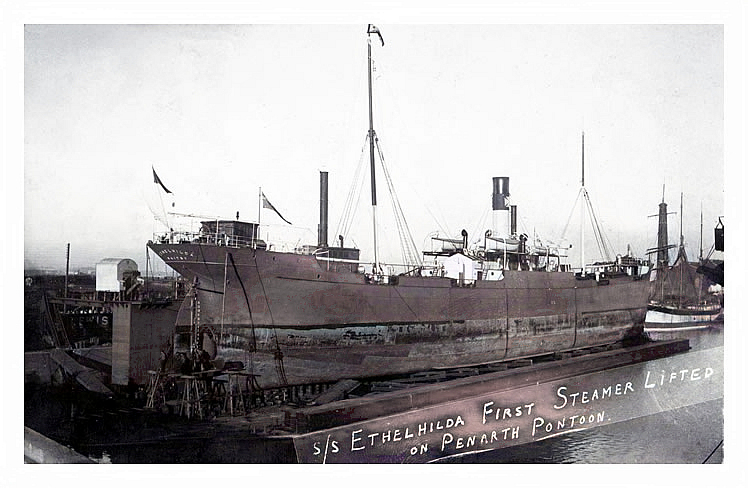
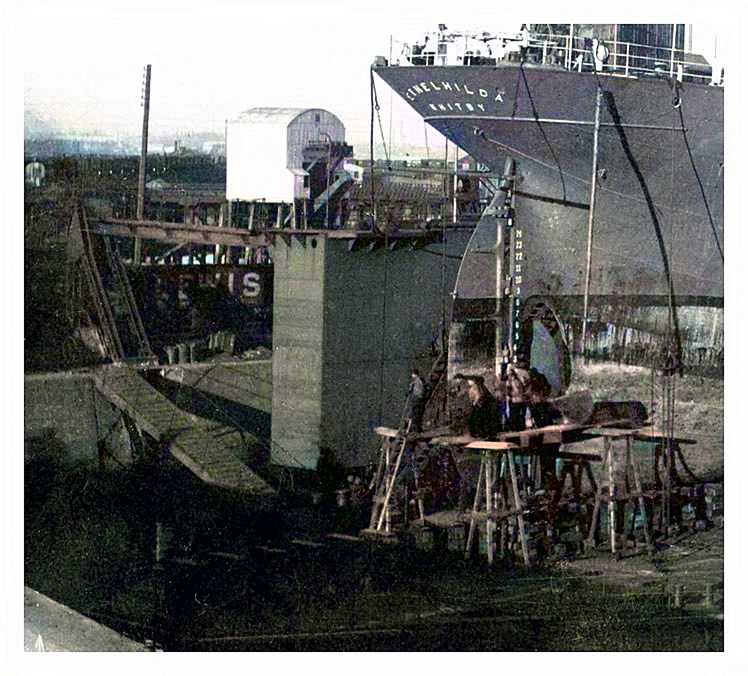
In 1914 she made news in America having been featured within the Public Health Reports of 17th April under the heading 'Ship Rats and Plague'. The short report ends by summarising the effects of inter-continental rats upon the human populations of the world:- 'The consequences have been that the rat has become cosmopolitan, a globe trotter so to speak. The grey or Norway rat and also the black rat have colonized in all parts of the world, and the globe trotting on the part of these rodents still continues. It is for this reason that they are of particular significance in the spread of plague. The rat by traveling on ships has, since 1894, spread plague to all parts of the world. Vessels frequently carry cats to keep down the rats, and recently the Surgeon General of the Public Health Service has encouraged shipping interests to adopt the practice of periodically fumigating vessels for the destruction of vermin. Due to the nature of construction of ships, however, the destruction of rats either by cats or by fumigation offers considerable difficulty. In this connection the accompanying photograph is of particular interest. It was forwarded by Surgeon G. M. Corput with the following memorandum: Every quarantine officer is familiar with the old plea of shipmasters that there is no use fumigating the cabin of a vessel because there is a cat on board which is an excellent ratter and renders it impossible for rats to live in the cabin. The enclosed pictures are the result of not believing this story. The British steamship 'Ethelhilda' arrived at this station (New Orleans Quarantine) March 18 (1914) from the west coast of Africa. The captain assured me that it was impossible for any rats to be in the cabin of his vessel because of the presence of an exceptionally good cat. The cabin was nevertheless fumigated. Through the irony the fate of the cat was forgotten. When the cabin was opened up the enclosed picture shows the result. Every part of the ship had many rats. The picture is limited however to what was found in the cabin. One cat 24 rats.' [333] Poor old puddy!
|
|||||||||



 The
The 
