|
|
Penarth Dock, South Wales - the heritage & legacy . . . |
|
|
Penarth Dock, South Wales - the heritage & legacy . . . |
 |
|||||
 |
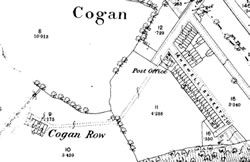
Volume Six - Pre-Victorian to the Present Day - Select Aspects - Growth and development at Cogan . . Various branch railways were incorporated, and in 1883 the capital amounted to £2,830,000: the receipts were £769,246, and the average dividend was 17 per cent.! In the same year the Company conveyed over their lines 9,421,803 tons of minerals and goods, of which they shipped 2,274,000 tons at Penarth.” It is no wonder then that Cogan grew at a great rate to house the workers and their families to support the performance of the railway and the mineral trade. By the 1870's, gas was being produced at Grangetown to light the streets of Cogan. The Cardiff Gas Light and Coke Co. having been opened in 1863. The Cogan brickworks ponds stank at times according to local reports and representations were made to local councilors on the subject. In May 1887 a special meeting of the local Council was convened to discuss the stench. Was it possible that sewage was seeping back into the ponds from the Ely River at high tides? I can find no record that a solution was found at the time. By 1903, the stench was intolerable and the Council were moved to contact the owners, the Bute Estate, to fill some of the ponds with household refuse! The brick-ponds, prior to this, were apparently renowned as a place where dead dogs were thrown and the locals drowned any unwanted cats!
The street was named after Cawnpore, India in commemoration of the 1857 massacre of 120 British women and children whose remains were thrown down a well. The retribution which followed by the outraged British army was bloody and included widespread atrocities against the captured Indian military as well as civilians. Queen Victoria finally intervened to quell the violence that ensued. |
||||
| Introduction | |||||
| Contents | |||||
| Search this site | |||||
| Contributions | |||||
| Links | |||||
| Recent Updates | |||||
|
|||||
| | volume 06 | chapter 04 | page 03 | << previous page << | index to volume six | >> next page >> | | |||||
|
|||||