|
|
Penarth Dock, South Wales - the heritage & legacy . . . |
|
|
Penarth Dock, South Wales - the heritage & legacy . . . |
 |
|||||
 |
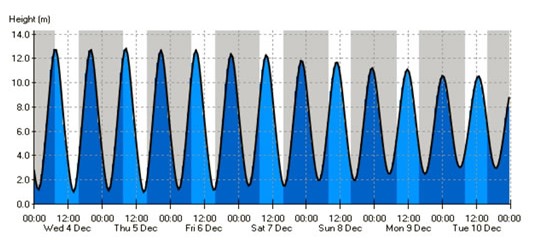
Volume Six - Pre-Victorian to the Present Day - Select Aspects - Structural Analysis of the river Ely Subway by Rota Design Limited - 2015 Eventually, we get a result which we have to interpret. Pour a strong coffee and take a deep breath. We get anomalies which we have to decide if they are where our shinny new computer has got its mathematical knickers in a twist. Once they are sorted look at plots of stress, strain and displacement etc. and then decide if there are areas which need further close examination. This is done by asking Spiderman to make smaller webs near to areas of high stress or deformation to evaluate more closely what is likely to happen to the structure when its under load in the real world. Strength of Cast Iron - We took a standard grade of grey cast iron when the tensile yield point is 98 MPa but its compressive strength is also six times greater at 570 MPa. MPa is a mega Pascal, a unit of pressure. 1 Pa is the shortform for 1 Pascal, and that is 1 Newton upon a square metre. So, 570 MPa is actually 570,000,000 Pascals. Simple! Maximum Load - The maximum load is assumed to occur where the subway dips to its lowest point under the river Ely and the water above is at its greatest depth and that is at Spring tides. We estimate these values from similar average densities of clays and gravels and the depth taken from the consulting engineer's drawing. The water level above the river bed at Spring tide is also shown and this seawater has a slightly higher density that fresh water.
|
||||
| Introduction | |||||
| Contents | |||||
| Search this site | |||||
| Contributions | |||||
| Links | |||||
| Recent Updates | |||||
|
|||||
| | volume 06 | chapter 17 | page 030 | << previous page << | index to volume six | >> next page >> | | |||||
|
|||||