Penarth Dock, South Wales - 150 years - the heritage and legacy  
Penarth Dock, South Wales - the heritage & legacy . . .

Volume Ten - Pre-Victorian to the Present Day - Even more aspects - The Lloyd's Register at Penarth Dock . . .

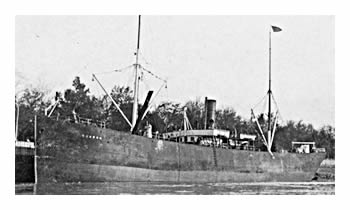
s.s. 'Ruabon'


British Boat is Torpedoed - London, May 6. - The British steamer 'Ruabon' has been sunk by a submarine, according to Lloyds. The crew was picked up by the Italian steamer 'Misurata.'

The 'Ruabon' was a vessel of 2,004 tons and was owned by the Ruabon Steamship Company of Cardiff. The steamer was last reported at Lisbon, April 5, having arrived there from Penarth. - 6th May 1916 [1406] [1240] Grand Forks Daily Herald (Grand Forks. N.D.)


The 'Ruabon' – official number 98417 – was a steel, single shaft, single screw cargo steamer built in 1891 by William Gray & Co. Ltd. of West Hartlepool, at Yard number 427, and fitted with an engine by the Central Marine Engineering Works Ltd., West Hartlepool. The ship was launched on 6th October 1891 and registered to The Ruabon Steamship Company Ltd. of 9 Mount Stuart Square, Cardiff, her Manager being James H. Cory of Whitchurch, Glamorgan. [1407]
 

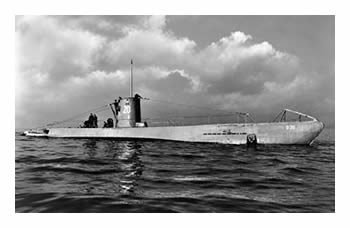
The s.s. 'Ruabon' was sunk by a torpedo fired by the German submarine SM U-20 whilst under the command of Kapitänleutnant Walther Schwieger off the north coast of France during a voyage to Troon, Scotland. The loss location was approx. 160 miles west-southwest of Ushant, off Brittany in the Atlantic Ocean. The voyage commenced Seville, Spain, with a cargo of iron-ore. Troon being an important industrial port, making the cargo part of the wartime supply network. The surviving ship-loss records indicate no fatalities. [263]

The SM U-20 - met its fate during November 1916 when grounded on the Danish coast south of Vrist, a little north of Thorsminde after suffering damage to its engines. The SM U-20 - met its fate during November 1916 when grounded on the Danish coast south of Vrist, a little north of Thorsminde after suffering damage to its engines. Her crew attempted to destroy her with explosives the following day, succeeding only in damaging the bow but making it inoperative as a warship. U-20 remained on the beach until 1925 when the Danish government blew it up in a 'spectacular explosion'. [003]
© 2014 - 2026 - penarth-dock.org.uk - all rights reserved - web design by Dai the Rat