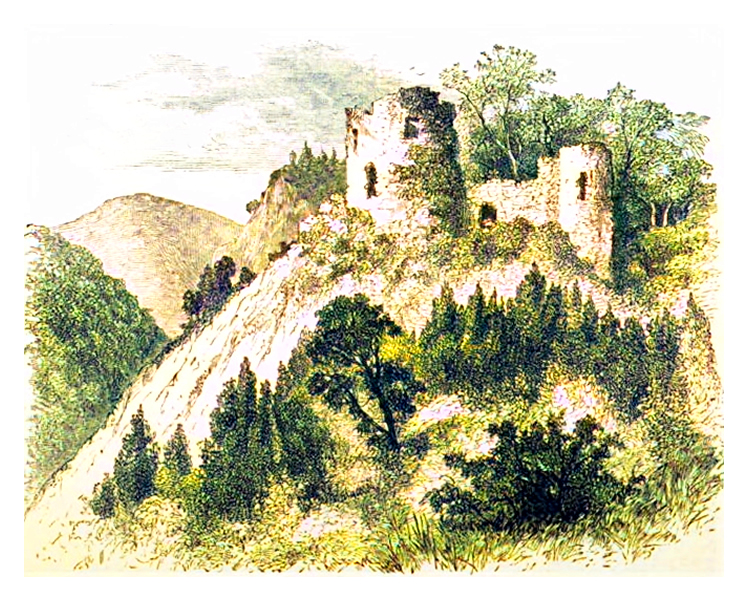
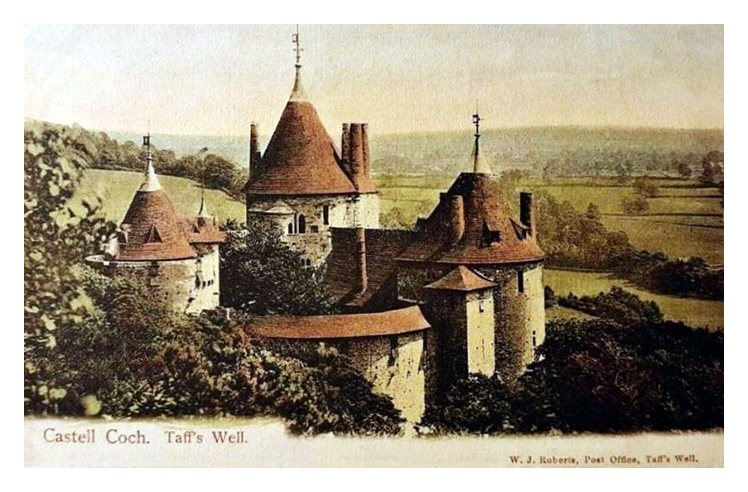
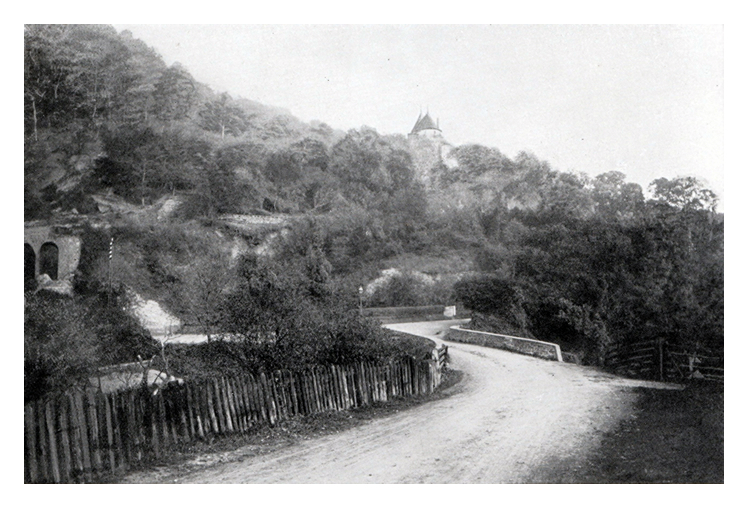
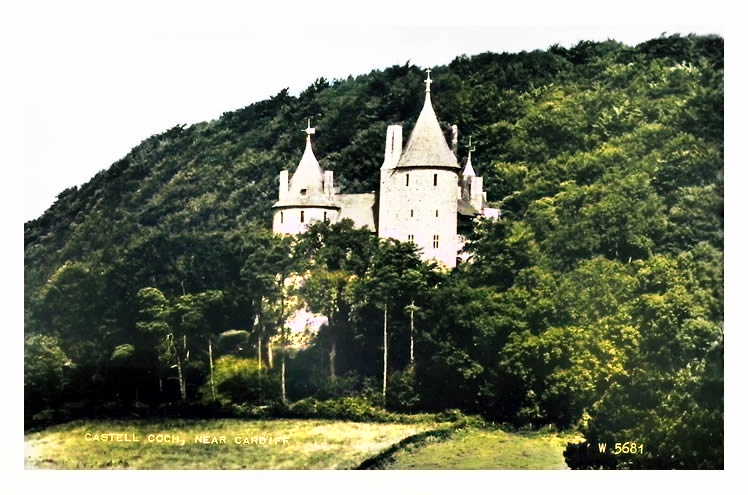
The original castle at Castell Coch is thought to have been constructed in the late 11th century. It was built to defend Cardiff and control the land around the river Taff. English nobleman, Gilbert de Clare, built a new castle between 1267 and 1277 to protect his land. This castle was probably destroyed in the native Welsh rebellion of 1314.
The site was acquired in 1766 by John Stuart, the 4th Earl of Bute and later the 1st Marquis of Bute, when he married Lady Charlotte Windsor. John Crichton-Stuart, the 3rd Marquis of Bute inherited the castle in 1848. Lord Bute met William Burges in 1865 and they began their long collaboration with Cardiff Castle. In 1871, Bute asked his chief Cardiff engineer, John McConnochie, to excavate and clear the castle ruins. Bute commissioned Burges to rebuild the castle in a Gothic Revival style. The construction took place between 1875 and 1879. [1271]

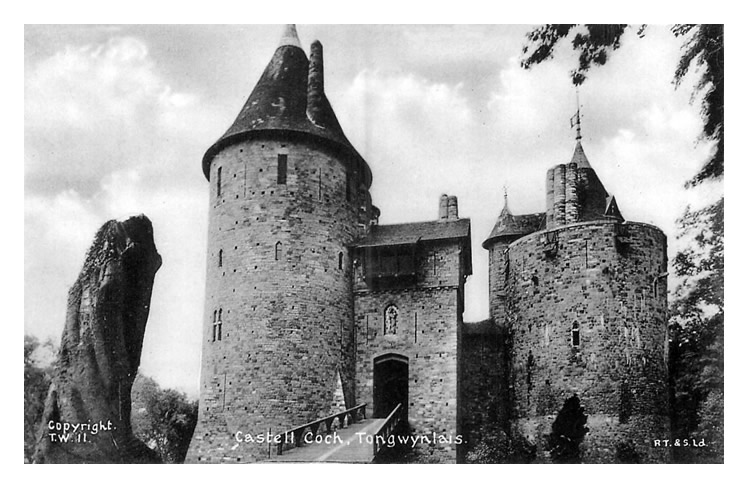
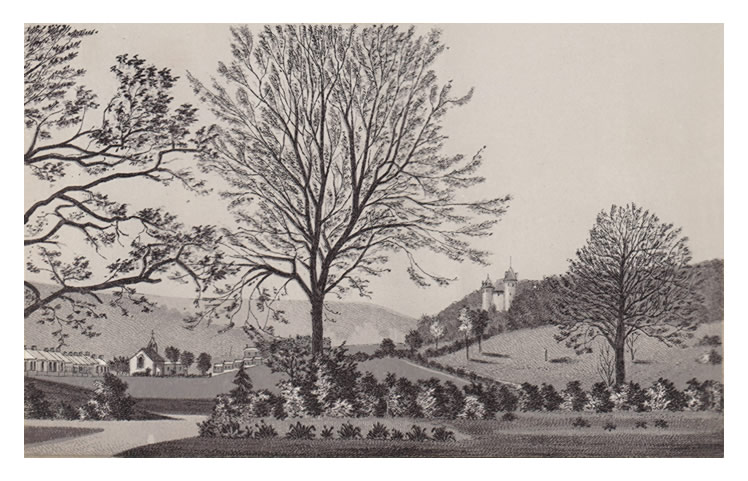
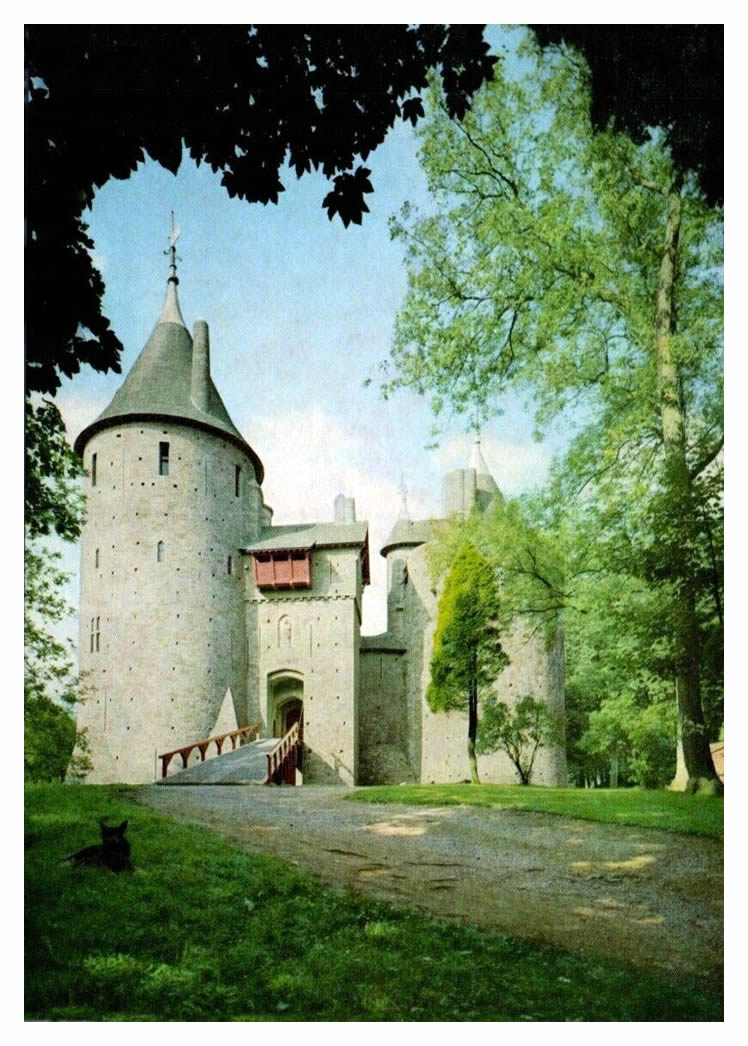
Castell Coch, near Cardiff, a thirteenth-century castle ruin, situated on a steep, rocky, well-wooded scarp beside the gorge of the river Taff, with a magnificent view of the Glamorgan sea-plain and the Bristol Channel, is unique in the series of monuments here reviewed . It was completely restored in 1875, for the third Marquis of Bute, by William Burges (1827-81) ,a distinguished architect steeped in the Gothic tradition.
Because of this, it vividly illustrates, in small compass, a characteristic early medieval combination of dignity and defensive strength. Dignity, manifest in the great Tower, the arched Entry and the elaborately decorated and furnished quarters of the Castellan ; strength in massive unbreached walling, in rock-cut moat and drawbridge easily raised, and in the complete provision for active defence by arrow-storm from tower, gate and curtain.
The peaked roofs of Rhenish character, with patterned leadwork and gilt finials, the heraldry, and the gaily painted woodwork of bridge, shuttered embrasures and stairs, accentuate the scholarly romanticism of the whole reconstruction. Nineteenth-century work in this field of endeavour is here seen at its best. - Ancient monuments in care of the Ministry of Public Building and Works; illustrated regional guide v.4 rev. (1954) [1272] [499]
|