Penarth Dock, South Wales - 150 years - the heritage and legacy  
Penarth Dock, South Wales - the heritage & legacy . . .
Volume Twelve - Pre-Victorian to the Present Day - further aspects - The River Ely Iron Ore Wharf . . .
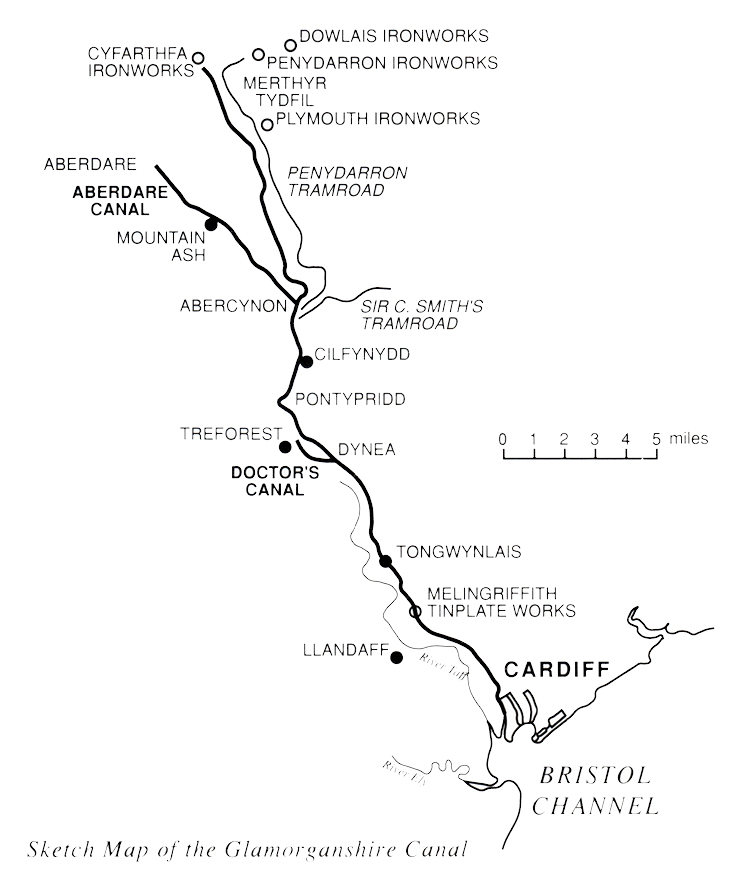
Sketch Map of the Glamorganshire Canal.

The Glamorganshire Canal, 25½ miles long, had a rise of 542 feet which required 52 locks to navigate. The final 1¾ miles to Dowlais and Penydarren works was undertaken by tramroad due to the rise of c.410 feet.

Dowlais - (1759 - Guest Family)
Cyfarthfa - (1765 - Richard Crawshay)
Penydarren - (1784 - Samuel Homfray)
Plymouth - (1763 - Richard Hill)

The above Sketch Map of the Glamorganshire Canal is borrowed from the March 1994 edition of Archive magazine. [631]

 
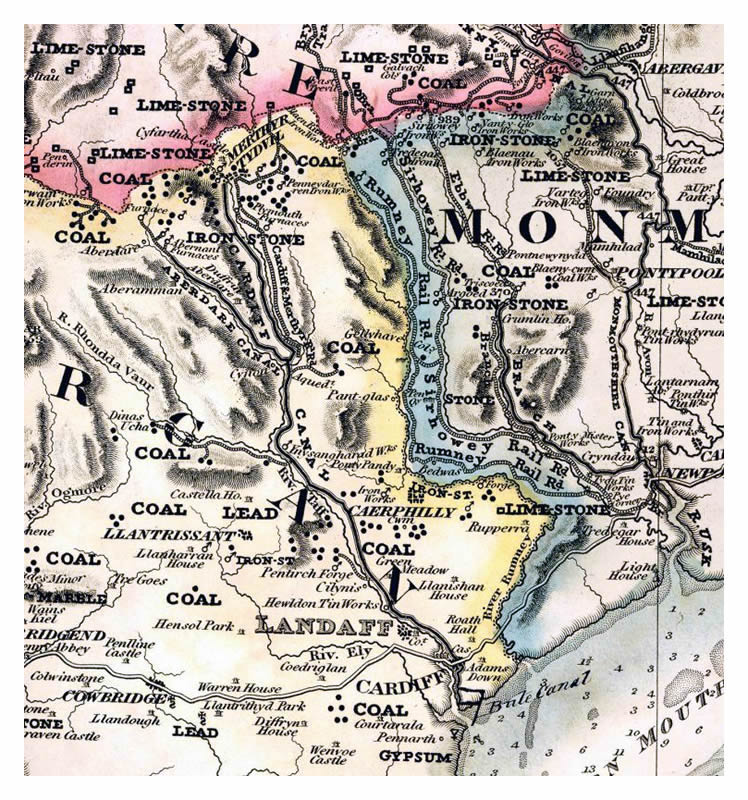
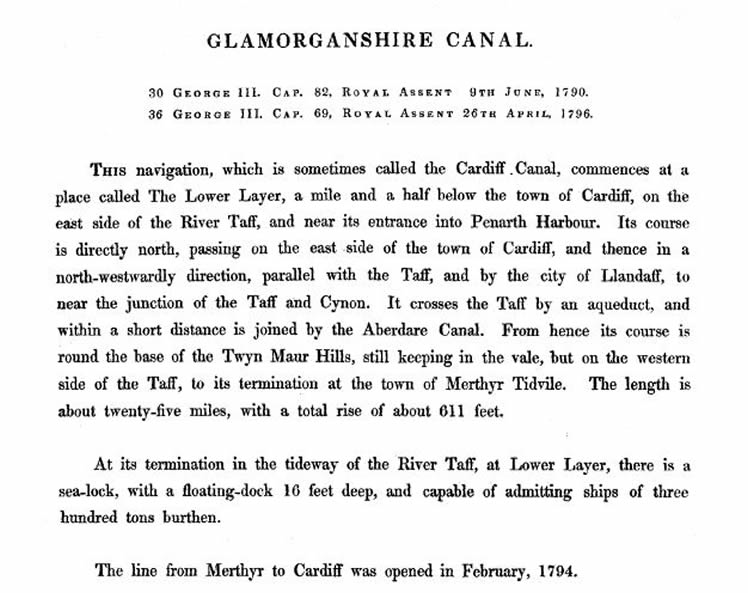
A section of the map with description of the Glamorganshire Canal (sometimes called the Cardiff Canal) taken from the 1830 George Bradshaw's (1801-1853) publication.

A section of the map with description of the Glamorganshire Canal (sometimes called the Cardiff Canal) taken from the George Bradshaw's (1801-1853) publication of 1830 : 'Map of the inland navigation canals and rail roads with the situations of the various mineral productions throughout Great Britain from actual surveys projected on the basis of the trigonometrical survey made by the order of the honourable the Board of Ordnance.' [000] [002]


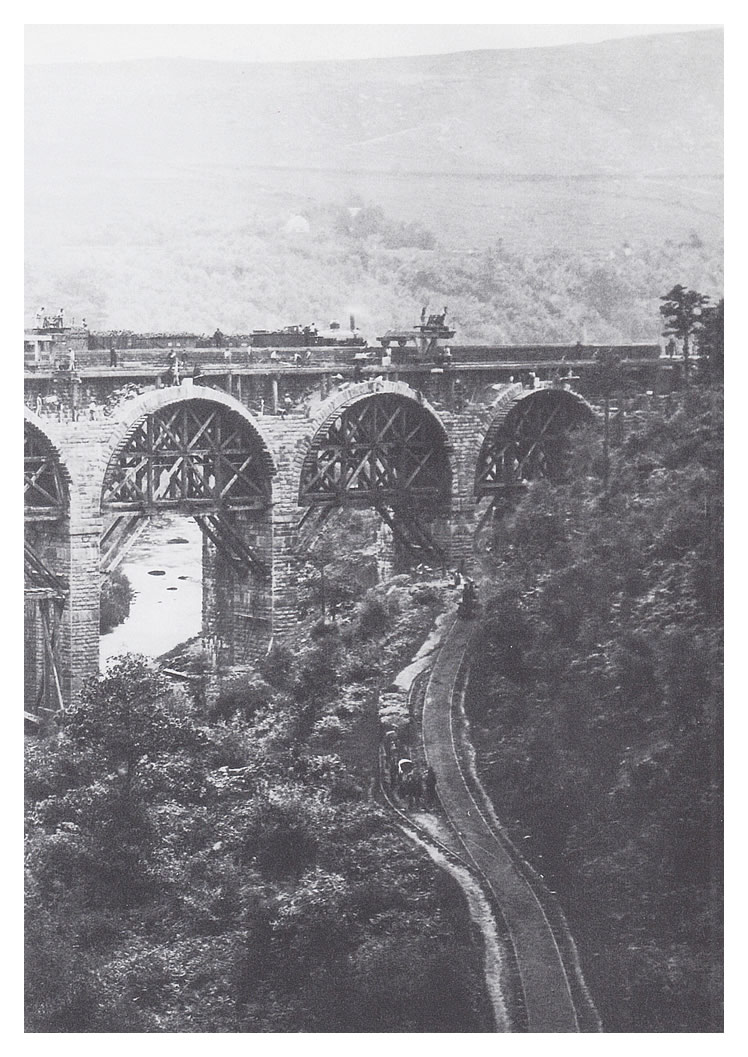
The Penydarren tramway still in use in 1862 with a southbound train hauled by two horses waiting in a turn-out. Construction goes on overhead on the Taff Vale Railway viaduct.

The Penydarren tramway still in use in 1862 with a south-bound train hauled by two horses waiting in a turn-out. Construction goes on overhead on the Taff Vale Railway viaduct. [credit : John Minnis] [1380]

The iron rails employed usually consisted of 'plates' of iron laid upon the top of wooden rails or masonry supports. Probably the occupation 'platelayer' originated from tramways such as the Penydarren.

 
1904 - Then and Now - [A hundred years ago yesterday the first steam locomotive made a journey of nine miles. The engine was one built by Trevithick, and the historic trip at Pen-y-darran was the outcome of a wager between Richard Crayshay and Samuel Homfray.] - Evening Express [135] [361] 13th February 1904


One hundred years ago a queer-shaped creature,
Uncouth and strange in every line and feature,
At Penydarren, on a tramway laid,
A tedious trip mid noisy jointings made.
Nine miles the queer machine contrived to run ;
Four hours the time in which the deed was done.
Of iron ten tons, of mortals seven times ten.
O what a contrast 'twixt our time and then,
That pigmy is to-day a thing of wonder.
Hurtling along upon its path of thunder,
Linking our islands with a chain of steel,
That would have set old Homfray's brain a-reel.
For how could Homfray or could Crawshay dream
Of all the marvels of the Age of Steam -
Of Flying Dutchman or of Scotch Express
At sixty miles within the hour or less?
And, lo! to-day another vision rises -
We live within the epoch of surprises.
That though the Iron Steed outstrip the bind
Yet e'en his haughtiness be left behind
For man will call the lightning to his side,
Making the steam-urged monster seem as slow
As Trevithick's a hundred years ago.
O, mind of man, when wilt thou be content?
When will thou cease to ponder and invent?
Onward and forward, higher yet and higher
It is thy heaven-wrought mission to aspire.
But still whatever in future lies
Be not too proud to backward turn thine eyes
Where Penydarren stared to see the power
That groaned along at two poor miles an hour.

                                                                IDRIS.

 
© 2014 - 2026 - penarth-dock.org.uk - all rights reserved - web design by Dai the Rat