Penarth Dock, South Wales - 150 years - the heritage and legacy  
Penarth Dock, South Wales - the heritage & legacy . . .

Volume Thirteen - Pre-Victorian to the Present Day - even more aspects - Random Rants, Notes and Articles No.3 . . . .

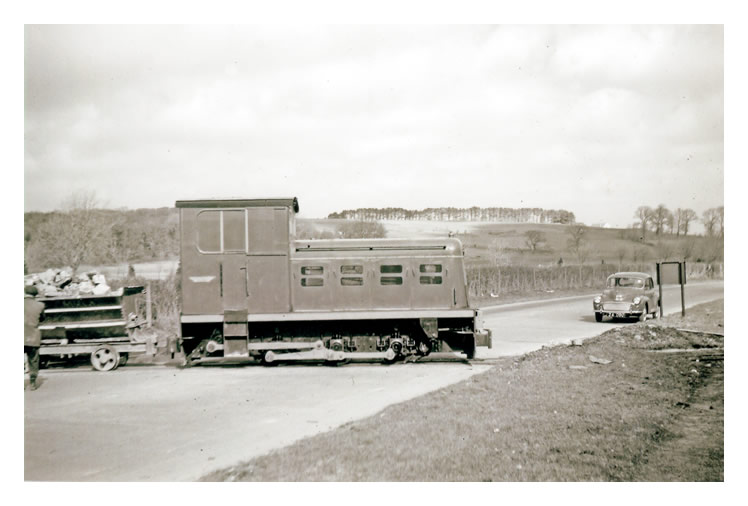
1963 - Penarth Cement Works - One of the last of two engines used to haul limestone from the quarry to the cement works.

1963 - Penarth Cement Works - One of the last of two engines used to haul limestone from the quarry to the cement works. The peak of production was a year earlier than when this photograph was taken during late March 1963. During 1962, 175,000 tons of cement were manufactured but the works closed in late 1969 due to the working out of the existing quarries and the inability to extent workings into adjacent agricultural lands. It brought to an end quarrying and processing at the Penarth site which had commenced in 1886.

The story of a previous steam engine serving the quarry named 'Marjorie' was covered at More Moments Captured in Time

The engine pictured above is a 100 h.p. diesel powered, 0-6-0, Fowler No. 416005/1951 which was built in 1951 at the West Riding of Yorkshire works of John Fowler & Co. (Leeds) Limited which was established back in 1863. The permanent way which ran across the Lavernock Road between the quarries and the cement works was a narrow gauge railway of 2' - 6" gauge. She had a twin sister of the same specification and age.

The above photograph is held within the Penarth Dock Collection. [001]

 
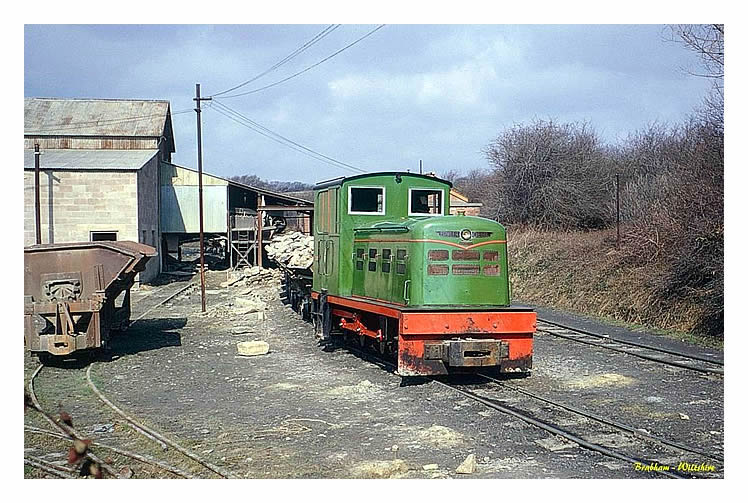
One of the Fowler engines at the Penarth Cement Company during April 1963.

One of the Fowler built engines at the Penarth Cement Company photographed during April 1963 whilst delivering its train of tipping wagons full to the brim with limestone for subsequent processing at the cement works. It would require about 1.5 tons of limestone (CaCO3) to produce one ton of cement in powder form dependent upon some variability in the seam being quarried. Crushed limestone was mixed with other raw materials such as clay, sand and/or shale in precise proportions to achieve the optimal composition. Gypsum was added which affected the setting time. The transformation of these limestone rocks to cement required processes such as crushing, grinding in a ball mill, mixing, and high temperature, pyro-processing, firstly to to create a clinker-like substance by sintering at 1,400 - 1,500 degrees C, which is subsequently cooled and ground to a fine powder with gypsum added. It was fed to storage silos and then finally, weighed and bagged and distributed in bags or in bulk. [photograph credit: Derek Chaplin - Peter Brabham Collection]

 
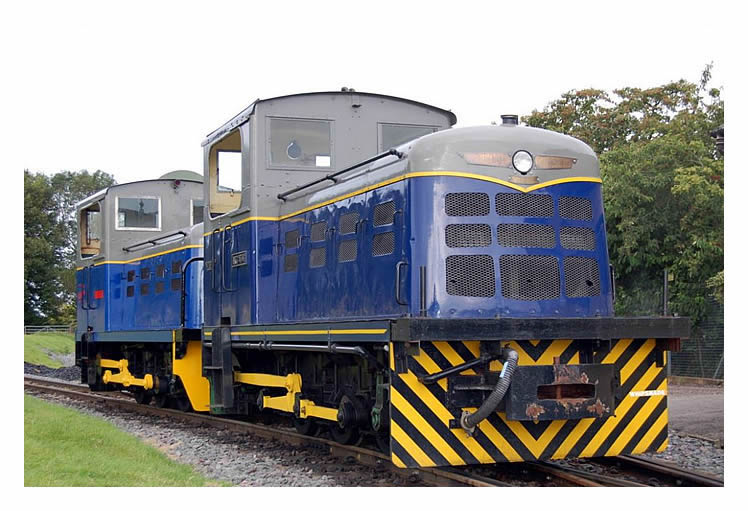
'Victor' and 'Hector' at the Whipsnade Zoo Railway.

'Victor' and 'Hector' at the Whipsnade Zoo Railway, having been acquired from the Welsh Highland Railway and the Welshpool & Llanfair Light Railway in the 1970's these being the two Fowler engines formerly employed at the Penarth Cement Works! Now smartly dressed for hauling coaches of visitors and not limestone rocks! [photograph credit : K. Edwins and Narrow Gauge Heaven]

 
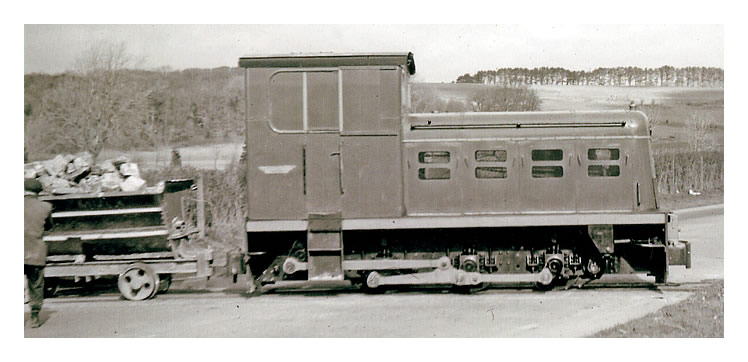
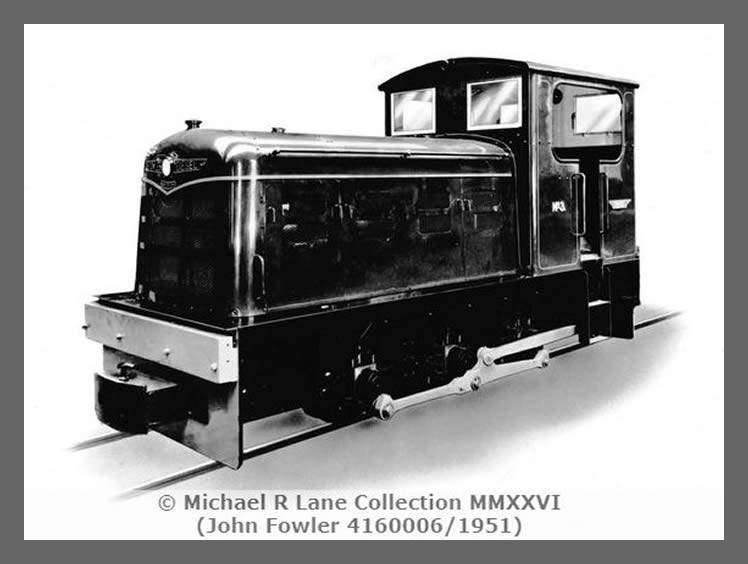
No.3 - The John Fowler Engine No. 4160006 built in 1951. The image is held on the Leeds Engine Builders website and is credited to the Michael R. Lane Collection. [1303]

 
Cosmeston Country Park.

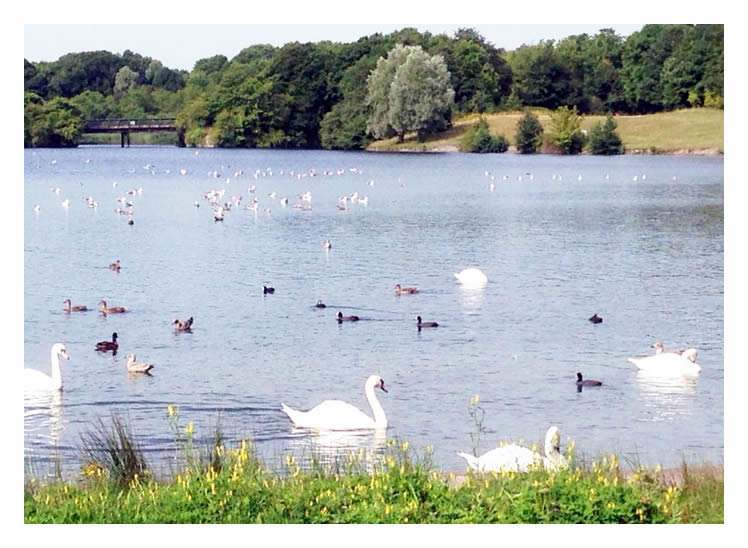
Cosmeston Country Park - The name derives from the 12th-century Norman village, Costentinstune, which was founded by the De Costentin family who arrived from the Cotentin peninsula (or Cherbourg Peninsula) of Normandy, France.

The photograph captures the extent of only one of the quarries following the closure of the works and the transformation of the industrial void into a series of lakes and the gradual conversion of the entire site to a country park. It shows that old mother nature has reclaimed what is rightly hers! Note the bridge in the distance which is the crossing between the quarries and also carries the track which connects the Cog to Lavernock Road. [000] [002]

 
Cosmeston Country Park Bridge.

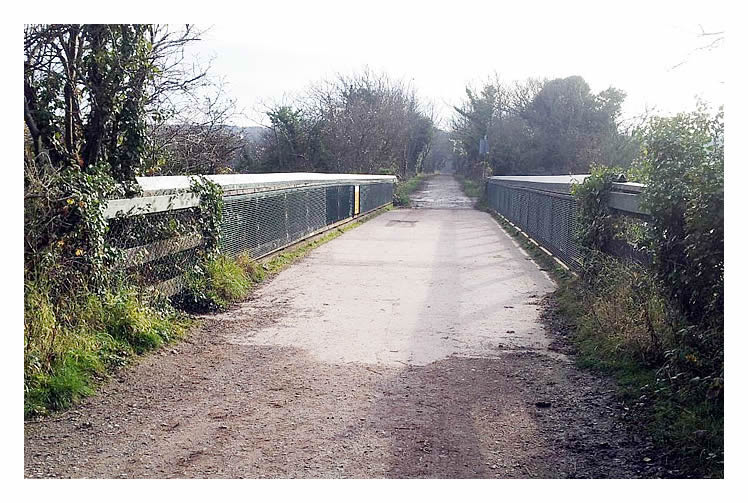
Cosmeston Country Park - The bridge over the Cosmeston Lake which, when I were a lad, back in the 1950's and 60's, crossed the workings of the quarries below with men working away and the narrow gauge-railway transporting limestone blocks to the works across the other side of the Lavernock Road. I always felt that the depth of workings there were probably much greater than the depth quoted today being in my estimation c.60 to 80 feet (18 to 24 metres) below the bridge level. [000] [002]

Being one of the local vandals, my friends and I would hurl lumps of mud and turf at the workmen below who often shouted 'get out' or 'sod off' or unrepeatable new words to add to our vocabulary, as we trespassed and caused disruption to the workmen during our long walks from Murch Road, Dinas Powis, via the old Cog Church and farm, onto the beaches at Lavernock, Sully and sometimes over the causeway to Sully Island if the tide was right. Oh how I miss those days!

 
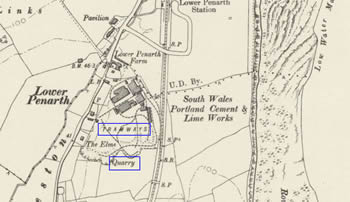
A section of the (1899 revision) O.S. map published in 1901 of the South Wales Portland Cement & Lime Works showing the tramway network and the location of the quarry in relation to the works and, at this date, without the need for the tramway to cross the Penarth / Lavernock Road. [010] [398]
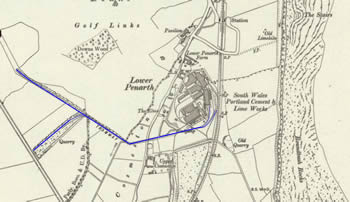
A section of the (1915 revision) O.S. map published in 1922 of the South Wales Portland Cement & Lime Works showing the development of the revised quarry locations and tramway crossing the main Lavernock Road ; thus the birth of the Cosmeston Lane of today! [010] [398]
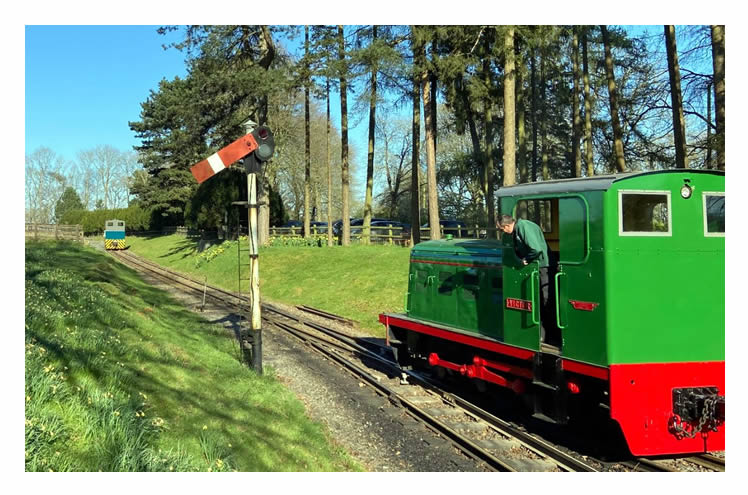
During April 2026, Mr. Chris Alcock of the Whipsnade Steam Railway was in contact regarding the history of the two Fowler Engines which are in use at Whipsnade. I was able to point him in the direction of various archives and websites which may be able to assist him in his research into the origin of these fine engines. He responded by sending the above photograph of both engines at work at Whipsnade. He commented 'At 100HP, these do not seem to be particularly powerful engines. Indeed, at Whipsnade, passenger trains are reduced to 5 coaches when using the diesel, vs. a full rake of 6 coaches when steam hauled.' I recalled that they towed about 5 or 6 tipper trucks full to the brim with large lumps of limestone at about 5 m.p.h. Many thanks Chris and good hunting. [1392]


The history of limestone, nearby Lower Penarth, at Lavernock is quite intriguing and the following is based upon the research of Stephen Rowson and Ian L. Wright for their informative books on the history of the Glamorganshire and Aberdare Canals. [528]

Aberthaw was a well known source of limestone from early times and renowned for construction works, since, when burnt in a kiln using anthracite coals imported from further west in the South Wales coalfield, it produced high quality hydraulic lime mortar which is capable of hardening and setting under water. Natural hydraulic lime is a traditional binder produced by burning limestone containing clay (6-25%), which sets given a combination of chemical reaction with water (hydraulic setting) and carbonation (where carbon dioxide reacts with the calcium hydroxides to form solids of calcium carbonate which adds strength).

The beach at Lavernock, consisting of Jurassic limestone cliffs and rocky shoreline platforms otherwise known as the Lower Lias, also yielded stone with similar characteristics and was much sort after by the bridge builders, canal and weir constructors and for mortar for the construction of Penarth Dock, etc., etc. Limestone is a sedimentary rock created by layers of the skeletons and shells of sea creatures which died in ancient seas, settled on the seabed, were compressed by subsequent layers, and thus, over eons hardened, forming into dense, horizontal layers, of limestone.

For the builders of the Glamorganshire Canal (Thomas Dadford) and even earlier, 'Cardiff Lime' was known for its hydraulic and structural capabilities. Lime burning in kilns was a common feature at the seaward end of the River Taff and in 1774, the Melingriffith Tin and Iron Works of Whitchurch, North of Cardiff, was buying lime from Thomas Williams of Town Quay, a local lime-burner. The following year it is recorded that the company leased a kiln from the Corporation of Cardiff at 6p per week to process limestone picked from the beach and cliffs at Lavernock (just below the South Wales Portland Cement & Lime Works referenced above) and brought to the River Taff wharfs by coasting vessels.

The company records for the period indicate that the Radyr Weir which was needed to supply water to power the water-wheels of the works as well as navigation for boats was built utilising this hydraulic lime to bond the blocks of local Pennant stone. This was some two decades prior to the building of the Glamorganshire Canal for which this hydraulic lime was used throughout.

 
"Concrete for Permanence" use The South Wales Portland Cement & Lime Co., Ltd., Penarth, Cardiff.

An advertisement published within the 1928 Annual Report of the Cardiff Royal Infirmary. [000] [002]

"Concrete for Permanence" use The South Wales Portland Cement & Lime Co., Ltd., Penarth, Cardiff. - Established 1888 - Capacity 1,000 tons weekly - Dragon Brand - All our Cement is guaranteed to EXCEED the requirements of the British Standard Specification of October 1925 - On Admiralty and War Office Lists - Telephone : 300 Penarth - Telegrams : " CEMENT, PENARTH. "

© 2014 - 2026 - penarth-dock.org.uk - all rights reserved - web design by Dai the Rat